


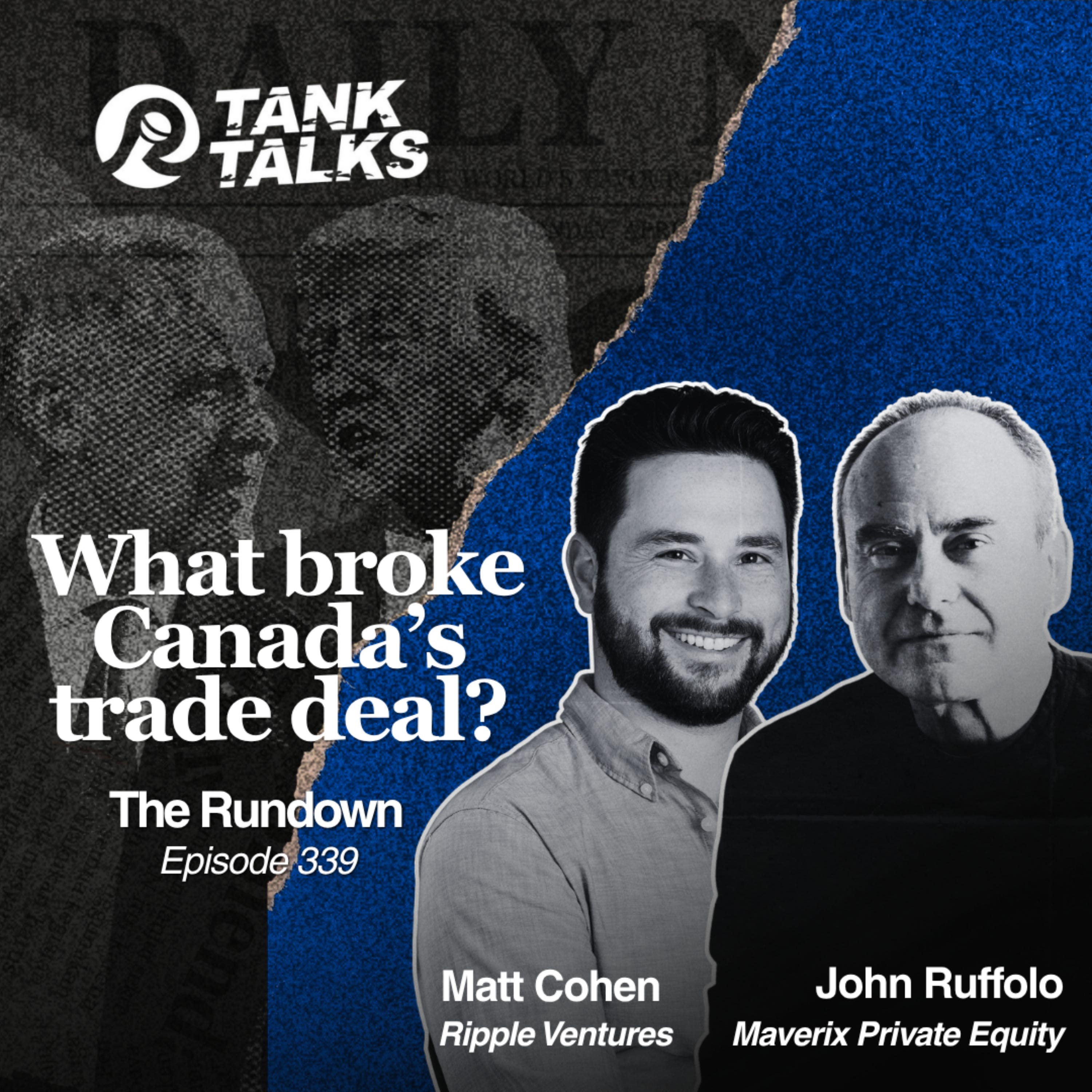
Matt Cohen and John Ruffolo break down the collapse of Canada-U.S. trade negotiations, the unanswered questions surrounding the failed deal, and whether Canada is protecting legacy industries at the expense of technology and long-term economic growth.
They also examine Prime Minister Mark Carney’s ambitious pitch to bring international capital back to Canada, including billions of dollars in proposed energy, transportation, infrastructure, and technology projects. But can a polished deal book convince investors to fund projects that have struggled to attract capital for years?
Finally, Matt and John unpack the political battle forming around Anthropic’s anticipated IPO, the growing influence of AI regulation campaigns, and Miro’s dramatic fall from a $17.5 billion valuation.
As Canada searches for a way out of its trade crisis, global investors are being asked to reconsider the country’s economic potential. At the same time, AI companies are entering a political and regulatory battle that could determine who controls the industry’s future.
If you are a founder, investor, policymaker, or anyone trying to understand where capital and technology are heading next, this episode is worth your time.
–
A big thanks to our sponsor, Moomoo Canada
This is the kind of tooling that used to live on a Bloomberg terminal, but now it is on your phone, just a few taps away. They offer real-time data, full options chains, and an AI assistant that actually explains trading strategies.
Moomoo is the perfect place for people who want to take their money seriously. Open an account today at moomoo.ca
Why Canada-U.S. Trade Talks Fell Apart (01:31)
The latest Canada-U.S. trade negotiations appeared close to producing an agreement until everything suddenly unraveled. John argues that the biggest problem is not simply the failed deal, but the Canadian government’s refusal to clearly define what success was supposed to look like.
With provinces reportedly objecting to parts of the proposed agreement and conflicting stories emerging from both sides, Canadians are left guessing about what happened. John asks the uncomfortable question: Is Canada protecting dairy and other legacy interests while sacrificing its technology economy?
The Real Cost of Walking Away From the U.S. (07:43)
Many Canadians support ending the negotiations, but that support begins to disappear when higher taxes, rising unemployment, and slower economic growth enter the conversation. John warns that Canada cannot reduce its dependence on its largest trading partner without experiencing real financial pain.
That burden will not be shared equally. Older Canadians with homes, pensions, and U.S. investments may be able to absorb the disruption, while younger Canadians already struggling with housing and affordability have much more to lose.
Carney’s Plan to Bring Investment Back to Canada (10:18)
The Canada Investment Summit is presenting more than 160 opportunities across energy, critical minerals, transportation, manufacturing, digital technology, and infrastructure. The goal is to reintroduce Canada to international investors after a decade in which global capital largely looked elsewhere.
John supports the strategy but tempers expectations. The summit may not produce immediate checks, but it could rebuild the relationships Canada needs to finance major projects and reverse its reputation as an undercapitalized market.
Anthropic’s IPO Enters the AI Political War (16:15)
A former Anthropic researcher’s warning about self-improving superintelligence quickly spread across the internet, creating fresh questions about AI safety and the company’s anticipated IPO. Matt examines whether the viral backlash emerged organically or was amplified by politically connected organizations pushing for tighter AI regulation.
John believes there is no neutral position in the AI debate anymore. Competing groups are funding optimistic and catastrophic narratives, turning data centers, employment, regulation, and AI safety into deeply political issues. Despite the controversy, he does not expect the backlash to derail Anthropic’s IPO.
Miro’s Collapse and the Continuing SaaSpocalypse (21:11)
Miro was valued at $17.5 billion at the height of the software boom. Its reported acquisition by Bending Spoons at a fraction of that valuation shows how brutally the market has repriced venture-backed SaaS companies.
Miro remains a substantial business with hundreds of millions in recurring revenue and a strong enterprise customer base. The problem was not the product; it was the inflated valuation and financing structure built around it. John expects more overfunded unicorns to face similar outcomes.
Connect with John Ruffolo on LinkedIn: https://ca.linkedin.com/in/joruffolo
Connect with Matt Cohen on LinkedIn: https://ca.linkedin.com/in/matt-cohen1
Visit the Ripple Ventures website: https://www.rippleventures.com/


